
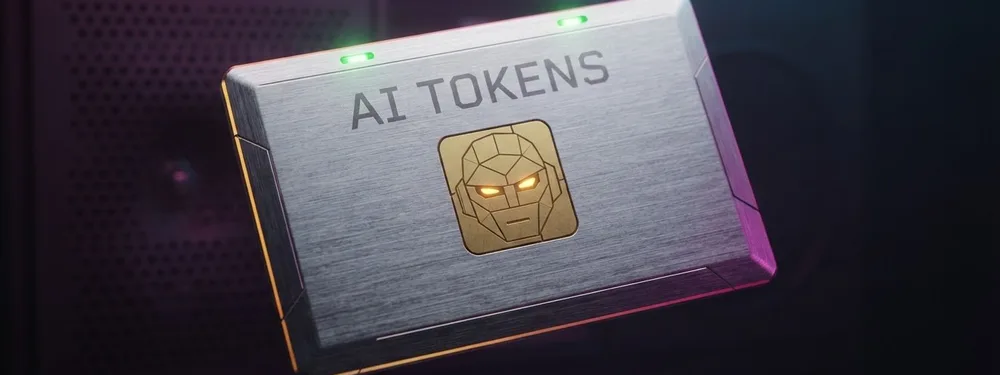
FIG 0 Tap or insert. The machine takes a balance, not a banknote.
A credit card that pays in tokens. A dumpling shop that gives them away. A bank that lends against them. The same idea showed up across China in a year, and it’s already here in a quieter form.
It’s tempting to call this the birth of a currency. That’s half right, and the wrong half is the interesting part.
In China, tokens already work like money inside one company’s walls
Credit cards that pay in compute
China Merchants Bank started in June with a card for AI developers: up to 1.8 billion MiniMax tokens for new cardholders. Shanghai Pudong Development Bank subsidises up to 3 billion Qwen tokens. In July, Moonshot AI put its name on a Kimi card with the Agricultural Bank of China and American Express.
These are reward programmes, not payment systems. You earn tokens by spending yuan, and spend them with one model provider.
Phone plans, dumplings and resale
China Telecom sells plans from 9.9 yuan a month for 10 million tokens, and its TokenHub sells subscriptions across 142 models. In Beijing, a dumpling shop called Jingu Yuan hands out 10 yuan of compute credits with a meal, more than 100 vouchers a day.
China’s daily token consumption hit 500 trillion in mid-2026, up from 100 billion in early 2024. At that volume, tokens become something people compare, collect and trade.
Banks that lend against token use
Guangzhou’s Haizhu district launched a “token loan” in August. Banks including Bank of China and CITIC can weigh a company’s token production and consumption when setting credit limits, because young AI firms have few other assets. The district adds up to 2 million yuan a year toward token bills.
A token stopped being a cost of goods. It became something a balance sheet can be measured against.
In America, the same idea arrived as a perk
A fourth line in the job offer
Silicon Valley didn’t need a government. Candidates at OpenAI now ask how much inference compute they’ll get. Greg Brockman, in public: “The inference compute available to you is increasingly going to drive overall software productivity.”
Tomasz Tunguz calls inference a fourth part of engineering pay, after salary, bonus and equity. He puts $100,000 of inference on a $375,000 salary, over 20% of the cost.
Credits became the default price tag
On the selling side, credits are the unit. Microsoft, Salesforce, Cursor, OpenAI, Adobe, HubSpot and Replit all sell AI through credits. Buyers get a pool and spend it.
So the same object is a reward, a budget and a perk. No wonder people reach for the word currency.
But why does it feel like money at all?
Tokens fail the three jobs money has to do
Money is a medium of exchange, a unit of account and a store of value. Score tokens against each.
A medium of exchange that stops at the door
A Kimi token buys Kimi. It doesn’t buy Qwen, and it doesn’t buy dumplings. Every scheme here is a closed loop with one issuer. The loop is the point.
A unit of account that changes with the language
This is the objection that settles it, and it has nothing to do with crypto. A study of 25 European languages found that the same text costs 1.23 tokens per word in English and about 3.1 in Greek and Maltese.
A fixed bundle therefore buys roughly 2.5 times less work in Athens than in Dublin. A unit that changes with the customer’s language isn’t a unit of account. It’s different products at one price.
A store of value that expires
Balances expire. Models get retired. The price of a given capability keeps falling. Holding tokens isn’t saving. It’s holding a coupon with a date on it.
What tokens resemble is company scrip
Closed loop, issuer-priced, non-transferable
Company scrip was money issued by an employer, spendable only at the company store. No exchange rate, no way out, often stamped non-transferable. The issuer set prices, so the issuer captured the value.
Token rewards are the polite version. Voluntary, marketed as perks, on a screen instead of a paper note. The mechanics are the same.
America outlawed it as pay in 1938
So why is it legal? Because it arrives as a perk, not a wage.
US rules don’t authorise wages in scrip. That’s why every modern version arrives as a reward rather than a wage, and why serious token pay is a budget on top of a salary.
The market that formed is for compute, not tokens
Forward curves for GPU rent
If tokens were becoming money, the new financial products would be about tokens. They aren’t.
Kalshi launched compute forward curves in July 2026, showing the implied price of renting B200, H200 and A100 chips. ICE and Ornn announced futures on a transaction-based index, in dollars and cash-settled, pending approval. CME announced two contracts for 5 October, each 730 GPU-hours of H100 or B200 rent. This week, CME’s own page still described the launch as pending regulatory review.

The commodity, not the money
CME’s announcement says it outright: “Compute has become the currency of the AI age.” Then it builds a forward curve, which is what an exchange builds for a commodity. Oil isn’t a currency either.
The token is the retail packaging. Compute is what’s being priced.
What is missing, and what would have to be true
A unit of work, not a unit of tokens
The unit would have to be a finished task, so a Greek buyer and an Irish one get the same thing for the same money. Nobody sells that. Everyone sells tokens.
A clearing house for unused credits
Companies sit on prepaid balances they can’t spend, transfer or value. A published price would tell them what those balances are worth. It doesn’t exist.
A standard clause set for credits
Expiry, model version, transfer rights, refunds if a model retires. Four plain clauses would remove most of the risk from a credit purchase.
What to do this quarter
If you buy AI
Price in dollars per outcome, not per token. Check expiry, and check whether the credit survives a model change. Treat a prepaid balance as vendor financing, because that’s what it is.
If you sell AI
If you sell credits, you’re issuing a private currency. Decide what it’s worth in work, publish it, and keep the terms short enough that a buyer can repeat them.
If you’re paid in it
Take the salary. Treat the token budget as a tool for the job, not as savings, and get the number in writing so you can compare offers.
The pricing problem comes first
A token nobody can price is a positioning problem
These schemes feel like money and fail like coupons because nobody has said, in one sentence, what a token buys. That’s a positioning problem before it’s a monetary one, and it’s the work we do.
If you’re building something that sells in credits, start a conversation with us.